


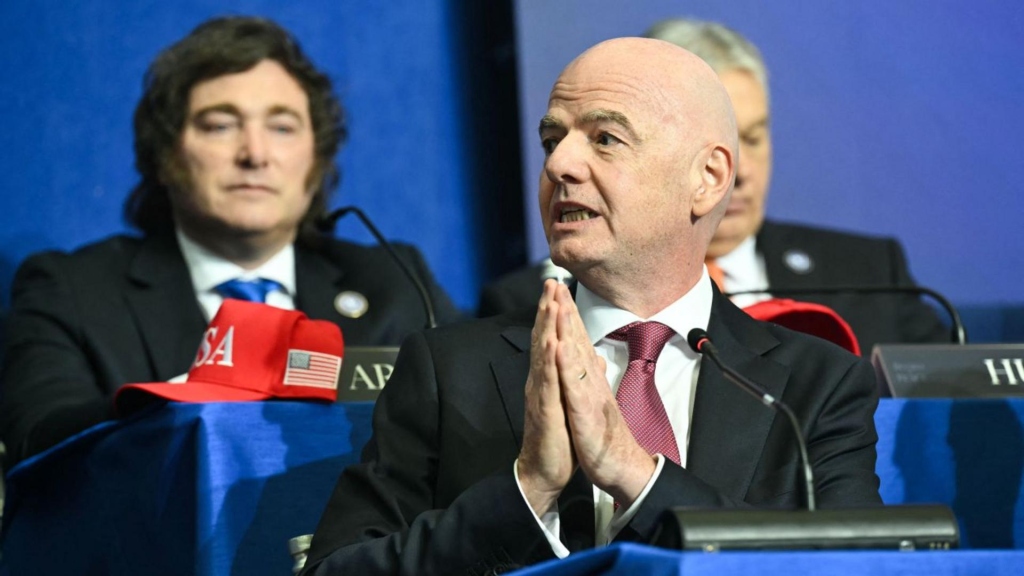
Infantino Calls for Red Cards for Players Covering Their Mouths During Matches
In a recent and somewhat surprising move, FIFA President Gianni Infantino has advocated for stricter disciplinary measures against soccer players who cover their mouths while communicating on the field. This statement has sparked an intense debate within the football community about fairness, privacy, and on-field behavior regulations.
Infantino’s Stance and Reasoning
Gianni Infantino, widely recognized as a reformist figure in international soccer, proposed that players who cover their mouths during matches should face red card sanctions. The rationale behind this unprecedented suggestion is rooted in attempts to enhance transparency and sportsmanship on the pitch. Infantino argued that covering mouths can impede broadcast commentators, analysts, and fans from understanding tactical discussions or exchanges between players, which form a critical part of viewing experience and game analysis.
He emphasized:
- Players covering their mouths can create suspicion and raise questions about potential unsporting behavior or hidden communications.
- Maintaining an open and transparent environment on the pitch helps uphold the integrity of the sport.
- This policy could deter negative behaviors such as coded messages or strategies intended to deceive referees or opponents.
Reaction from UEFA and Other Football Authorities
UEFA has long been concerned about conduct that could be deemed unsporting or secretive, although the organization has not officially adopted any rule mandating red cards for mouth covering at present. UEFA’s position has traditionally been to preserve players’ rights to privacy and prevent overt policing of verbal communication tactics during games.
Several national football associations and leagues have expressed mixed opinions. Some agree that excessive secrecy can undermine transparency, while others caution about the feasibility and fairness of such a rule, especially given that covering mouths is often a simple reflex to prevent lip reading by opponents or camera lenses, rather than an attempt to cheat.
Players and Coaches Weigh In
Players, both at club and international levels, have voiced apprehension about the proposal. Many highlight the normal practice of covering mouths to avoid giving away strategic details or sensitive information to rival teams. Coaches also argue that this is part of gamesmanship and tactical secrecy, which are integral to competitive soccer.
Some players feel that penalizing a gesture as minor as covering one’s mouth could detract from the spirit of the game and lead to unnecessary interruptions and disciplinary actions. Others believe there should be clearer guidelines distinguishing harmless communication from unethical practice.
Potential Impact on the Game
If adopted, such a rule could radically alter the way players communicate on the pitch. It could:
- Force players to be more cautious in on-field communication.
- Reduce covert information exchange, thereby potentially reducing unsporting behaviors.
- Increase referee interventions focused on verbal as well as physical conduct.
- Change the dynamics of player interaction and strategy-sharing mid-game.
On the other hand, critics warn it could complicate referee duties and increase controversial red card decisions, affecting game fairness and flow.
Looking Ahead
As of now, FIFA and UEFA have not enacted any new regulations regarding red cards linked directly to mouth covering. However, Infantino’s comments have opened a lively conversation about transparency, player behavior, and the evolving interpretation of fair play in modern football.
The topic continues to garner significant attention among sports media, fans, and officials alike, with many awaiting possible discussions in upcoming FIFA and UEFA policy meetings.
For now, while no concrete changes have been applied, stakeholders are encouraged to share their views, as governing bodies consider future directions in football conduct and disciplinary codes.
Image courtesy by www.espn.com